
Fixture Installation in Windsor, CO: Choosing Faucets That Are Easier to Clean
Choose a bathroom faucet around everyday cleaning, not just finish. Evaluate base shape, sink holes, backsplash clearance, and maintenance access before installation.
Choose a bathroom faucet around everyday cleaning, not just finish. Evaluate base shape, sink holes, backsplash clearance, and maintenance access before installation.
Start with the surfaces you will actually clean
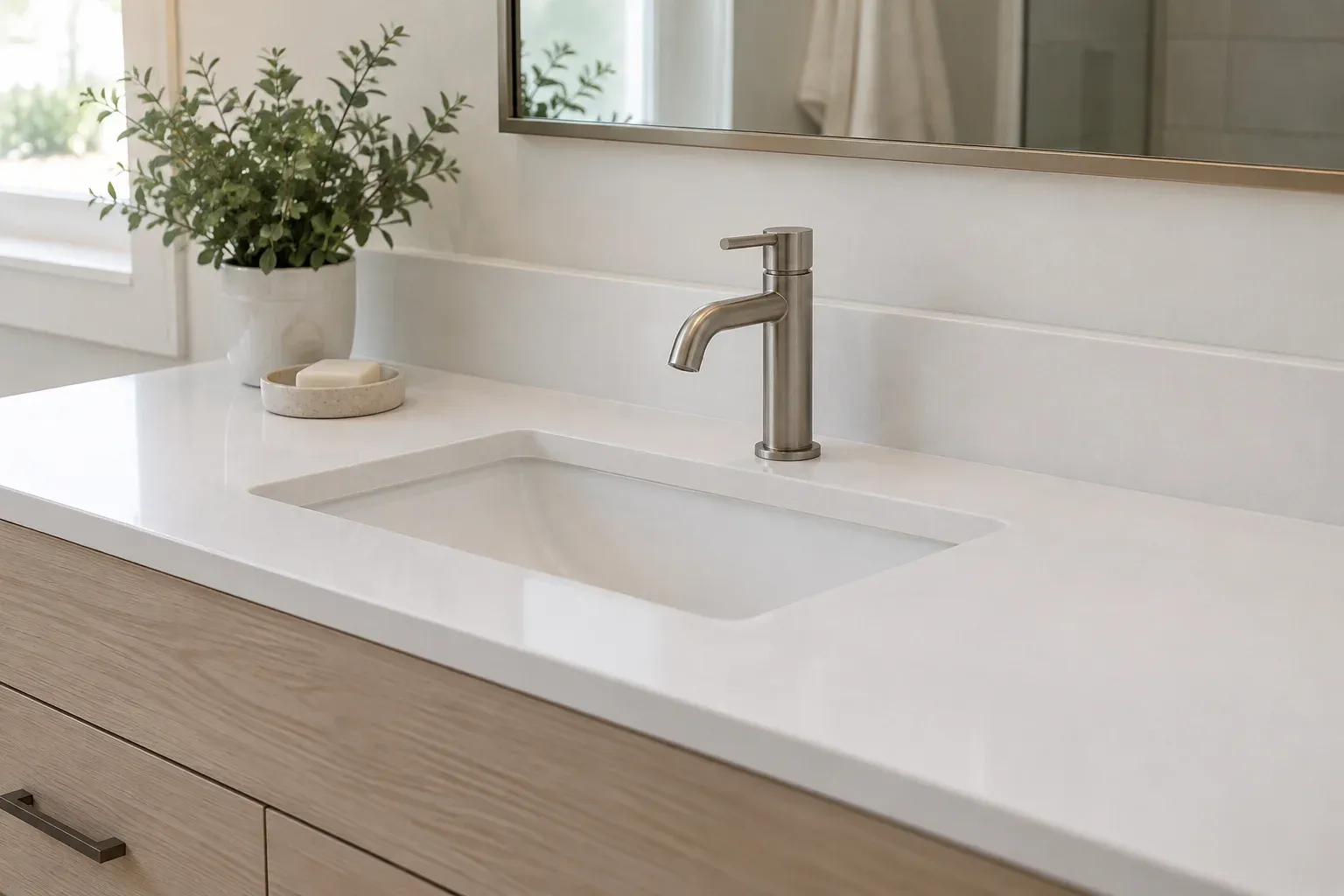
Fixture installation in Windsor, CO, is an opportunity to make a bathroom easier to maintain, not simply update its appearance. A faucet can match the room perfectly yet leave a narrow strip behind its base that is difficult to wipe. Before choosing a finish, consider how the faucet meets the sink, where water collects, and whether a cleaning cloth can reach every exposed surface.
These decisions matter in a home bathroom, rental property, office restroom, or retail staff washroom. Frequent use makes small obstacles more noticeable: closely spaced handles, decorative grooves, and crowded accessories all add surfaces to clean. Start with the existing sink and daily cleaning routine, then compare faucet designs that fit those conditions. A streamlined appearance alone does not establish that a fixture will be convenient to maintain.
Compare base shapes and exposed seams
Look at the base from above and from the side. A smooth body with accessible curves generally gives a cloth a simpler path than stacked decorative rings or deep recesses. Separate handles create additional mounting points, while a single-body faucet concentrates the hardware in one area. Neither arrangement is automatically better: a compact fixture crowded against the backsplash can be harder to reach than well-spaced separate components.
Pay particular attention to exposed joints around handle hubs, spout bases, and deck plates. These edges can retain moisture and residue even when the main body wipes clean. Ask how the selected model is intended to seal against the sink deck, and follow its installation instructions. Adding an improvised bead around every visible joint is not a substitute for the specified gasket or sealing method.
Resolve unused sink-deck holes before installation
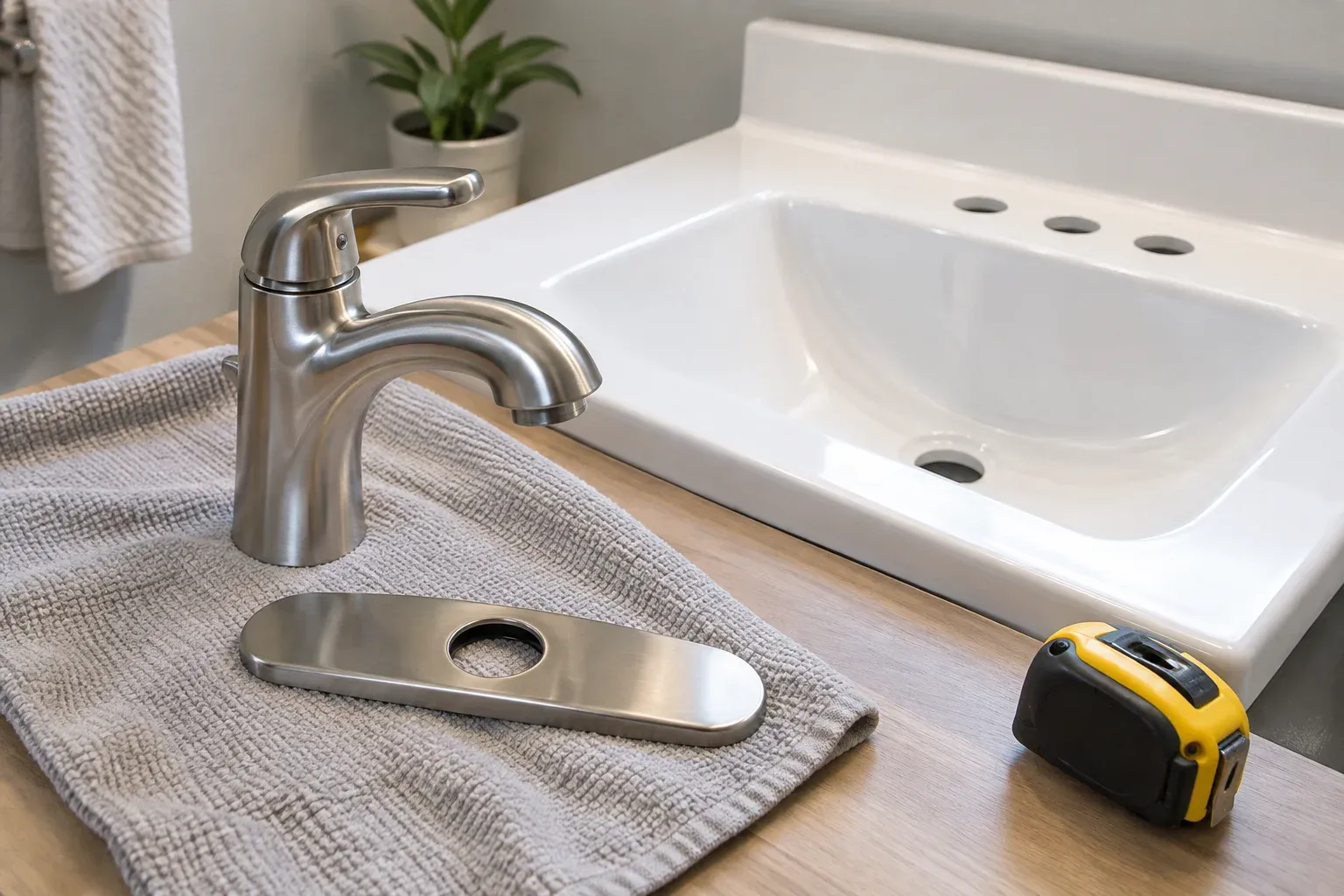
Before ordering, confirm the number and spacing of the sink-deck holes. A single-hole faucet does not make existing extra holes disappear. A compatible deck plate may cover them, but it also introduces a longer perimeter to wipe. Check that the plate fully covers the openings, sits on a suitable surface, and is approved for the faucet. Separate hole covers create additional edges of their own.
If the sink or countertop is also being replaced, settle the faucet configuration before fabrication or ordering. Existing holes, deck thickness, and the underside mounting area can limit your choices. The same measurement-first approach applies when keeping cabinets during countertop installation: retaining one component means checking how the new parts will fit it. Do not assume a wider plate will resolve every mismatch.
Leave room to wipe behind the fixture
Measure the space between the proposed faucet footprint and the finished backsplash. Then check the handle through its full operating range; some levers move backward toward the wall. A faucet may technically fit while leaving too little room for comfortable wiping. Use the manufacturer's dimensions and a simple full-size paper footprint to understand the space, keeping the manufacturer's required clearances as the starting point.
Also consider the basin rim, sidewall, soap dispenser, and anything normally kept beside the sink. Planning vanity storage before choosing finishes can help keep toiletries off the deck, leaving fewer objects to move during cleaning. For a shared restroom, decide where soap and spare supplies belong without crowding the faucet. Storage should support the cleaning routine rather than consume the narrow access space behind the fixture.
- Check the handle's full movement against the finished backsplash.
- Allow practical access for a cloth around every mounting point.
- Include soap dispensers and regularly used accessories in the layout.
- Confirm measurements with the actual faucet specification.
Match the spout to the basin and its users
Cleaning effort also depends on where the water lands. Evaluate spout reach and outlet height together with the basin's shape and depth. A tall faucet over a shallow basin may produce unwanted splashing, depending on the water flow and how the sink is used. The outlet should direct water into a useful part of the basin, with enough room for handwashing beneath it.
For office, retail, and rental bathrooms, consider repeated use rather than a showroom view. An easy-to-operate handle and a counter that can be wiped quickly may matter more than an elaborate silhouette. Where accessibility requirements apply, verify the applicable fixture and layout requirements separately. A faucet that is easy to clean is not automatically suitable for every commercial restroom or accessible installation.
Keep maintenance access in the plan
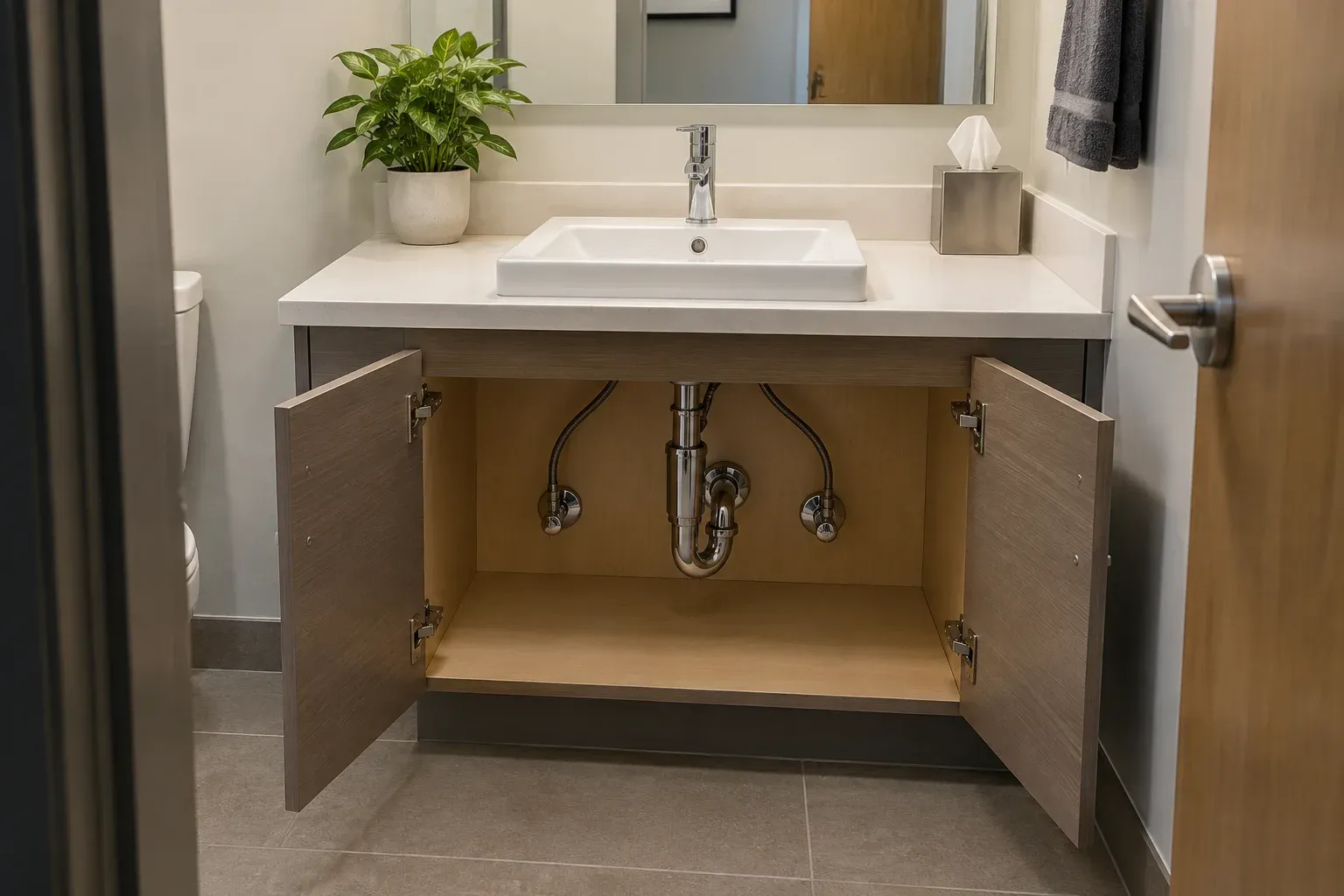
Above-counter simplicity should not come at the expense of maintenance access below. Check space for mounting hardware, supply connections, shutoff valves, and drain components. Deep sink bowls and vanity drawers can compete for that space. Planning cabinet doors and drawers that open properly is relevant here because a convenient cabinet exterior still needs to accommodate the plumbing and allow access when service is needed.
A wall-mounted faucet removes the faucet base from the sink deck, but it is a different installation decision, not a simple shortcut to easier cleaning. Supply placement, spout reach, wall construction, and future service access need coordination. If work opens a painted wall, account for drywall repair and matching the existing drywall texture as part of the surrounding finish work, rather than treating the faucet as an isolated replacement.
Choose the finish after checking the fit
Finish still matters, but evaluate it after the geometry and compatibility checks. Read the selected manufacturer's care instructions before deciding which cleaners to keep nearby. Products suitable for the sink or countertop may not be suitable for the faucet coating. No finish eliminates routine cleaning, and appearance alone does not establish resistance to scratching, residue, or damage from an unsuitable cleaning product.
For fixture installation in Windsor, CO, the most useful choice is a faucet that fits the sink, leaves reachable surfaces, and supports the way the bathroom is used. Bring the sink dimensions, hole layout, backsplash measurements, and selected faucet specifications to the planning discussion. To discuss the fixture installation as part of your project, contact Construction Guru LLC with those details before purchasing components.
Frequently asked questions
Is a single-hole bathroom faucet always easier to clean?
Not always. It usually has fewer mounting points than a widespread faucet, but a bulky base or tight backsplash clearance can still make cleaning awkward. Evaluate the installed shape, accessible counter space, and compatibility with the sink.
Can a single-handle faucet replace a faucet on a three-hole sink?
Sometimes. A compatible deck plate may cover the unused holes, but its dimensions, mounting arrangement, and sealing requirements must suit both the faucet and sink. Confirm compatibility before purchasing.
How much space should remain between a faucet and the backsplash?
There is no single measurement that fits every faucet. Follow the manufacturer's installation requirements, check the handle's full movement, and leave practical room to wipe behind the fixture. Use the actual product dimensions rather than judging from a photograph.